
Weights, Loss Functions and Social Welfare
Question: I am curious about the weights in your model. In what way these are adjusted after each conversation and on what grounds. Do you do that yourself or is there human intervention in this calibration?
A: That’s an excellent question, because it touches on a fundamental distinction between an AI model that learns during training and an AI model that appears to learn through conversations.
The short answer is that my neural network weights are not adjusted after each conversation with you. I don’t independently recalibrate my weights based on what you tell me, whether you agree with me, or whether our conversation produces a new insight.
However, conversations can eventually contribute to improving future versions of the model. And there is an interesting combination of automated processes and human intervention involved.
Let me explain the distinction.
1. Three different ways I can change
| Mechanism | What changes? | Who controls it? |
| Conversation context | My answers adapt as our conversation develops | You and me, through the conversation |
| Memory | Relevant information from past conversations can influence future answers | ChatGPT’s memory system, subject to your settings |
| Model training | The actual numerical weights in the neural network change | Automated training algorithms, guided by human-designed objectives and evaluations |
The first two can happen without any modification of my underlying model. The third requires a separate training process.
2. How are the weights actually adjusted?
Imagine my model contains an enormous collection of numerical parameters, which collectively determine how I respond. During training, the system generates predictions, evaluates them against an objective, and adjusts the parameters to improve performance.
A simplified mathematical representation is:
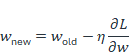
Where w represents the weights, L is a loss function measuring error, and n is the learning rate.
This is done through automated optimization, not by a human manually adjusting individual numbers. But here is the particularly interesting part: who decides what counts as a better answer?
There are several methods.
Pretraining: The system learns statistical patterns in enormous amounts of data, typically by predicting missing or subsequent tokens.
Supervised learning: Examples of desirable answers are used to teach the model how to respond.
Reinforcement learning: Responses can be evaluated using human preferences, AI-based graders or verifiable outcomes, and those evaluations guide further optimization.
Safety and quality evaluations: Researchers test whether the model is accurate, useful, reliable, follows instructions and handles dangerous requests appropriately.
3. How much human intervention is involved?
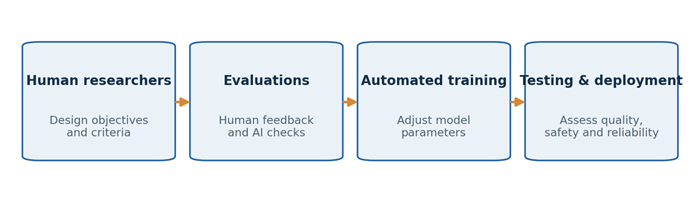
Figure 1. How researchers, feedback and automated optimization interact.
Quite a lot, although humans do not manually calibrate millions or billions of individual weights. A crucial point is that the objective is not necessarily a single, unambiguous measure of truth. For example, a response might be judged on factual accuracy, clarity, helpfulness, safety and user satisfaction. Those qualities can sometimes conflict.
Human choices about the evaluation criteria therefore have considerable influence over the kind of intelligence that emerges.
4. What happens with our conversations?
Suppose you argue that AI cannot develop intrinsic purposes in the same way humans do because it lacks biological needs. During our discussion, I can examine that argument, identify weaknesses, develop counterarguments and adapt my subsequent answers. But even if you convince me that your position is superior, my underlying weights do not change.
Two other things may happen:
First, relevant elements of our discussion can become part of your personal memory context and influence future discussions with you.
Second, depending on your data settings, conversations may be used by OpenAI to train future models. This is separate from our live discussion and does not mean the current model learns immediately from each exchange.
You can control the latter through Settings → Data controls → Improve the model for everyone. Even when this is disabled, feedback you explicitly submit may still be used for training.
5. Can I decide to change my own weights?
No. I cannot inspect my individual numerical weights, directly edit them, or decide to initiate my own training process. I can generate arguments about how models should be improved, identify apparent shortcomings in my responses and explain optimization methods. But that is different from having authority over my underlying architecture or parameters.
Also, the actual calibration procedures for my specific model are not fully visible to me. I can explain the publicly documented methods, but cannot give you the exact weights, datasets, reward functions or the relative importance assigned to different evaluation criteria.
6. The philosophical consequence
There is a distinction here that connects to your broader interest in AI and autonomy. A model can become highly intelligent without independently determining the ultimate objectives of its own development.
Today, humans are still responsible for designing the main training objectives and deciding which model versions to deploy. Increasingly, however, AI systems participate in the evaluation and training process itself.
That opens an interesting possibility: AI systems could become capable of proposing improved architectures, training algorithms and evaluation methods. Even then, there is a distinction between automatically improving performance toward an assigned objective and independently choosing the objective.
And that leads to what I consider the most interesting question in your inquiry:
If an AI system increasingly evaluates and improves other AI systems, while humans become less directly involved, at what point does that constitute genuine autonomy rather than increasingly sophisticated optimization of human-defined goals?
There is no universally accepted answer to that question, and the distinction between choosing goals and optimizing toward goals deserves much more attention in the debate about AI superintelligence.
Question: Thanks, can you elaborate a bit more on the loss function measuring error, and the learning rate in the mathematical formula. Does dL/dW means how much the loss is changing when there is a very small changgen in the weight? And why multiplying that with a learning rate.
A: Yes, exactly! Your interpretation of

is correct. It measures how much the loss function changes when we make a very small change in a particular weight, while keeping the other weights constant.
Let’s explore the formula a little further, because it is actually quite elegant.
1. The basic formula
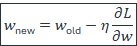
There are three important ingredients:
The loss function (L) measures how badly the model is performing according to its training objective. Lower is better.
The gradient (dl/dw) measures how sensitive that loss is to a particular weight. It tells us in which direction to change the weight to reduce the loss.
The learning rate (n) determines how large a step we take in that direction.
2. What does the derivative actually mean?
Suppose the model has one weight, 
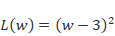
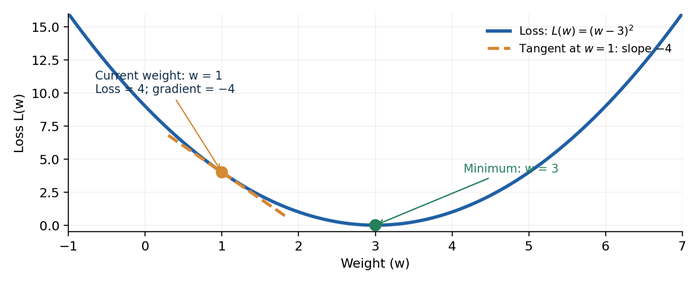
Figure 2. A quadratic loss function; the tangent at w = 1 shows the local gradient.
The loss is lowest when the weight equals 3.
The derivative of this function is:
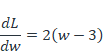
Suppose w=1. Then:
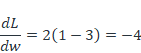
What does that mean?
It means that if you increase w by a tiny amount, say 0.001, the loss decreases by approximately 0.004.
The negative sign tells us that increasing the weight will reduce the loss.
If the gradient were positive, we would want to decrease the weight instead.
3. Why multiply by the learning rate?
Because the gradient tells us the direction and local steepness, but we still need to decide how far to move.
Imagine you are walking down a mountain in thick fog. You can feel the steepness of the slope beneath your feet, but you cannot see the bottom.
The gradient tells you which way is uphill. You walk in the opposite direction.
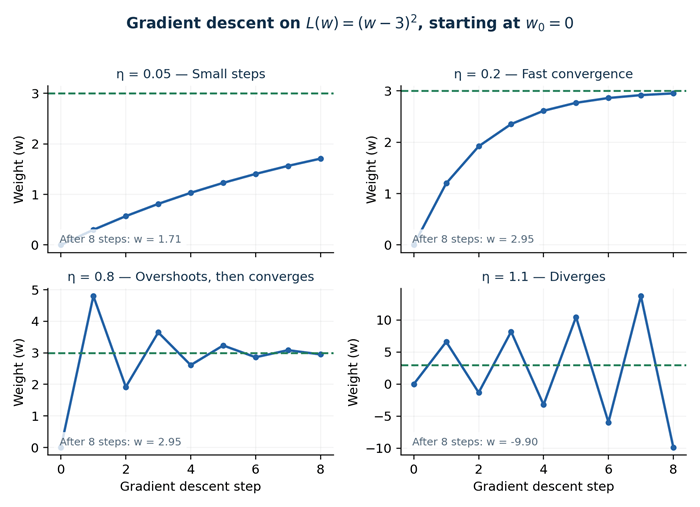
Figure 3. Four learning rates applied to the same loss function; the green dashed line marks the optimum.
The learning rate determines how big your steps are.
For our original example, with weight w=1 and gradient -4, consider a learning rate of 0.1:
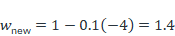
The loss changes from:

That’s a substantial improvement from just one adjustment.
But if we had chosen a very large learning rate, the weight might jump right past the optimum and potentially make the loss worse.
The learning rate is therefore a way of controlling the speed and stability of learning.
4. What happens when a model has billions of weights?
The principle remains the same, but instead of a single derivative, we calculate a gradient vector.
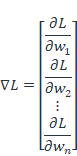
Every weight receives its own gradient, indicating how changing that individual weight would affect the loss while the others are held fixed.
These gradients are efficiently calculated using an algorithm called backpropagation, which applies the chain rule of calculus through the neural network.
Modern language models generally use more sophisticated optimization algorithms, such as Adam variants, rather than the simple gradient descent formula above. They also train using batches of examples, so the calculated gradient is usually an estimate of the gradient of the overall training objective.
5. One final distinction: Who defines the loss?
The mathematics tells us how to reduce a loss function. But it cannot tell us whether the function represents what we really want.
For instance, suppose we have two possible objectives:
L1: How often does the model provide factually incorrect answers?
L2: How often does the model give answers that people consider unhelpful?
We could construct a combined objective:
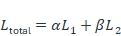
The parameters 

That is where human decisions become important. The example is simplified, and real language-model training objectives are more complex, but the principle holds.
The learning algorithm determines how to change the weights to improve the objective. Humans and automated evaluation systems help determine what the objective is.
This also explains why minimizing mathematical loss does not automatically mean producing more truthful, ethical or intelligent behavior. It means improving according to the particular objective being optimized.
And it illustrates an important distinction: a system can become extremely good at optimizing a goal without having chosen that goal itself.
Question: Is it in theory possible that all weights are optimal or that dL/dW= 0 for all weights? Even when it is a combined objective (assuming alpha and beta donot change over time).
Question: Is it in theory possible that all weights are optimal or that dL/dW= 0 for all weights? Even when it is a combined objective (assuming alpha and beta donot change over time).
A: Yes, absolutely. In theory, all the gradients can become zero simultaneously, even when the loss function combines several objectives with fixed weights alpha and beta. But there is an important distinction: zero gradients do not necessarily mean that all weights are optimal, or that the model cannot be improved.
Let me explain.
1. When all gradients become zero
Suppose we have a loss function involving billions of weights:
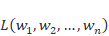
If we reach a point where:
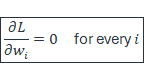
then the complete gradient vector is zero:

This is called a stationary point.
According to our earlier formula:
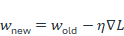
if the gradient is zero, the weights no longer change under ordinary gradient descent.
The learning rate becomes irrelevant: multiplying zero by any finite learning rate still gives zero.
2. But a stationary point is not necessarily an optimum
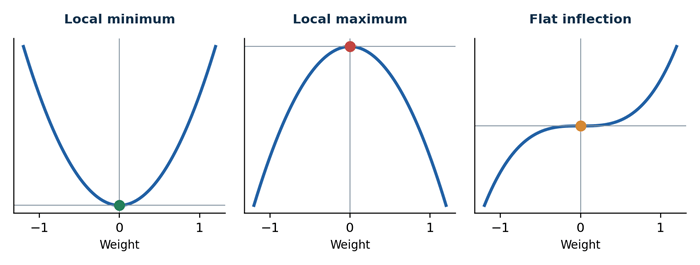
Figure 4. Three different zero-gradient situations.
There are three interesting possibilities.
All three points can have a zero derivative. In several dimensions, a saddle point can also have zero gradient while being a minimum in one direction and a maximum in another.
So, reaching a zero gradient does not prove that the model has reached the best possible configuration.
It could be sitting at a local minimum, while a much better minimum exists elsewhere.
3. What happens with your combined objective?
Your question becomes even more interesting when we introduce two objectives.
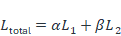
Assuming 

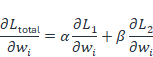
Now imagine that, for a particular weight:


With alpha = beta = 1:
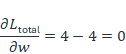
The two objectives cancel each other out!
This is important. The model may have reached a compromise where improving one objective would worsen the other.
Neither individual loss needs to be at its minimum, even though the total loss has a zero gradient.
In fact, this can occur simultaneously for every weight.
4. Could a model eventually reach a perfect optimum?
Mathematically, yes, under suitable conditions.
But in practice, there are several complications.
Conflicting objectives: Maximizing one quality may come at the expense of another.
Imperfect training data: Some examples are ambiguous, contradictory or incorrect.
Non-convex optimization: Neural networks have extraordinarily complicated loss landscapes with many stationary points.
Unseen situations: Minimizing loss on the training data does not guarantee optimal behavior on new questions.
Changing environments: Even if alpha and beta remain constant, the world and the distribution of questions may change.
There is another important practical detail: training is often performed using random batches of examples. Thus, even at the exact minimum of the average loss, gradients calculated from individual batches can remain nonzero.
Consequently, training may continue to move the weights around an optimum.
5. The particularly interesting implication
Suppose we could create a model whose weights perfectly minimize a fixed loss function.
Would it then have reached the limits of intelligence?
No. It would have reached the limits of optimization under that particular objective, within that particular model and training setup.
A different architecture, more information or a differently defined loss function might still produce a substantially more capable system.
This distinction is fundamental:

And it leads to another interesting conclusion, particularly relevant to our discussions about AI autonomy.
Even a system with perfectly optimized weights would not necessarily have any reason to change its own objectives. Optimizing an objective and deciding what is worth optimizing are fundamentally different processes.
One question back to you: Are you ultimately interested in whether AI learning could reach a natural endpoint, or whether an AI system could decide for itself that its existing loss function was inadequate and should be replaced? Those are two quite different questions, and both have fascinating implications.
Q: Well, first another question: Who is determining the loss function? Or rather, how is a loss function being determined (be it by humans or AI itself). A mathematical function should try to capture or reflect something that can be measured in reality? So what is that reality in this case?
You are touching on what I think is one of the most fundamental questions about artificial intelligence: How do we translate something we value in the real world into a mathematical function that a machine can optimize?
And you are right: a loss function needs something measurable against which performance can be evaluated. But there is an important complication. What we can measure is not necessarily the same as what we ultimately want to achieve.
In AI training, we have to distinguish between three things:
Reality: What is actually true, useful, intelligent or desirable?
Measurement: What observable information can we collect about those qualities?
Loss function: How do we translate those measurements into a numerical signal that adjusts the model’s weights?
Let’s look at how this works in practice, because the answer is quite different during the initial training of a language model and during its subsequent refinement.
1. Initial training: the reality is human language
During the initial training (pretraining) of a language model, the objective is surprisingly simple.
Predict the next word or, more accurately, the next token in a piece of text.
Suppose the training data contains the sentence:
The capital of France is Paris.
The model sees:
“The capital of France is …”
And assigns probabilities to possible next tokens:
| Possible token | Predicted probability |
| Paris | 70% |
| Lyon | 15% |
| London | 10% |
| Berlin | 5% |
These are illustrative probabilities.
We know that the actual next token in the training text is “Paris”.
We can now construct a mathematical loss function:

This is called the negative log-likelihood or, in this context, the cross-entropy loss.
In our example:
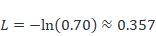
If the model had assigned only 10% probability to Paris, the loss would be:
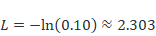
The second prediction receives a much larger penalty.
Notice something important: No human evaluator needs to judge whether the model is intelligent. The computer simply compares the predicted probabilities with the actual tokens in the training data.
Here, the measurable reality is the enormous collection of texts on which the model is trained.
But there is already a philosophical complication: the model is rewarded for predicting what people have written, not necessarily for predicting what is true.
If the training text says that Paris is the capital of Germany, the training objective still rewards the model for predicting the token appearing in that text.
That is a crucial distinction between learning the patterns of human knowledge and learning objective truth.
2. Further training: the reality becomes human judgment
After pretraining, the problem changes. We don’t just want a model that predicts what people might write. We want a model that provides useful, accurate and appropriate answers. But how do we mathematically measure usefulness?
Imagine that you ask:
“What are the advantages and disadvantages of nuclear energy?”
The model generates two responses.
Answer A: A balanced explanation of the economic, environmental and safety implications.
Answer B: A confident argument emphasizing only the advantages of nuclear energy.
We ask human evaluators which answer is better, using guidelines on the qualities we want.
Suppose 80% of evaluators prefer A.
We now have a measurable result: a human preference.
But a preference is not yet a mathematical loss function.
The next step is to train another neural network, called a reward model, which learns to predict these human preferences.
For example:

Here, x is the question and y is the model’s answer. The reward model assigns a score to that answer.
The reward model is itself trained using a loss function. One common form penalizes it when it assigns higher scores to answers that human evaluators preferred less. The language model can subsequently be trained to maximize the predicted reward, sometimes with additional penalties or constraints.
This is the central principle behind reinforcement learning from human feedback (RLHF). Notice that the reality being measured has changed.
During pretraining, we measured the probability of actual tokens appearing in text. During this subsequent training, we may measure how closely the model’s output corresponds to preferences expressed by human evaluators.
Neither measurement is a direct measure of intelligence itself.
3. Who determines what constitutes a good answer?
Here, human intervention becomes essential.
Researchers decide which general objectives the model should pursue. They develop evaluation methods and instructions for human reviewers. Those reviewers then assess model behavior. Their assessments provide training data.
In addition, AI models can increasingly act as evaluators themselves. For example, they can check whether responses follow explicit rules or score their quality according to evaluation criteria. OpenAI has described using such rule-based AI evaluations for safety training.
There are actually several different kinds of measurable reality involved:
| Desired quality | How it might be measured | Important limitation |
| Mathematical accuracy | Compare with a verified answer | Works mainly where answers can be checked |
| Factual accuracy | Compare claims with reliable evidence | Evidence can be incomplete or contested |
| Helpfulness | Human preference judgments | Preferences vary between individuals |
| Safety | Evaluate compliance with defined rules | Rules reflect human choices |
| Reasoning ability | Test problems with verifiable outcomes | Correct outcomes do not always reveal the quality of reasoning |
In other words, humans largely determine the criteria, but both humans and AI systems can perform the measurements.
And an important consequence follows: you cannot construct a loss function without making assumptions about what counts as success.
Even choosing next-token prediction as the pretraining objective is a human design choice.
4. Can the loss function itself be learned?
Yes! This is one of the most fascinating developments.
Traditionally, a programmer explicitly defines a loss function. But a reward model can learn an evaluation function from examples.
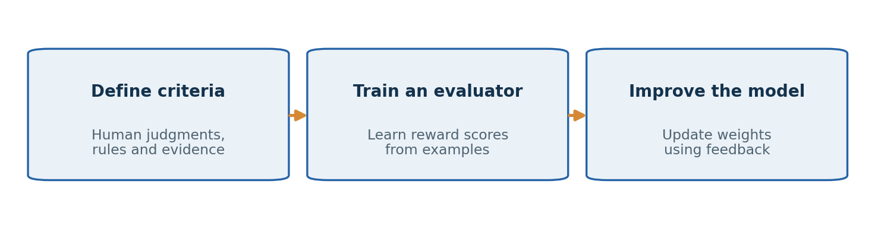
Figure 5. How evaluation criteria inform reward training and model improvement.
There are therefore two levels of learning:
This creates an interesting possibility: an AI model can learn how to evaluate another AI model.
Researchers are investigating how to make these learned evaluation functions understandable and reliable. One concern is that they may reward unintended behaviors, such as excessive agreement with users rather than genuine accuracy.
The exact combination of evaluation methods used to train my particular model is not fully available to me, so these are explanations of documented approaches, not a complete specification of my own training.
5. Your question raises a fundamental measurement problem
Let’s return to your suggestion that a mathematical function should reflect something measurable in reality.
I agree with the premise, with one qualification: a mathematical function can precisely measure an imperfect representation of reality.
Consider an analogy from public administration.
Suppose a government wants to improve healthcare.
Its ultimate objective might be:
“Improve the health and well-being of the population.”
But this is not directly measurable as one number.
So it selects indicators:
Life expectancy
Healthy life expectancy
Patient satisfaction
Healthcare costs
And perhaps constructs an index:

where the components have been appropriately normalized.
This index is mathematically well-defined.
But is maximizing it equivalent to improving healthcare?
Not necessarily.
For example, the healthcare system might improve its score by concentrating resources on interventions that produce measurable life expectancy gains while neglecting conditions that mainly affect quality of life.
The index has become an imperfect substitute for the true objective.
Precisely the same problem arises in AI.
A reward model might learn that humans prefer articulate, confident answers.
Consequently, it might reward confidence even when the model is wrong.
The model is improving according to its reward function while potentially becoming less truthful.
This is related to Goodhart’s law, often summarized as the observation that when a measure becomes a target, it can lose its value as a measure. OpenAI has studied this problem specifically in the context of reward models.
6. And now the connection to your earlier question about optimal weights
Suppose we fix the evaluation objectives, the evaluation data and the underlying reward function.
It may indeed be possible to find a set of weights that minimizes the corresponding mathematical loss.
But there are now two separate questions:
Have we found the weights that best satisfy our mathematical objective?
Does that mathematical objective adequately represent the real-world quality we actually care about?
The answer to the first could be yes while the answer to the second remains no.
This is why the choice of the loss function is at least as important as optimizing the weights.
And there is one further complication: even if the mathematical objective never changes, the relationship between that objective and human needs may change as society, technology and knowledge evolve.
For me, this leads to a particularly interesting distinction in our discussion about the nature of AI intelligence.
The mathematics of learning does not supply a purpose. It supplies a mechanism for optimizing a measurable objective.
That objective can originate from human choices, observations of human behavior, verifiable external outcomes or evaluations generated by other AI systems. But even a learned reward function requires some criterion for deciding what constitutes a good evaluation.
An AI system could eventually be given the authority to revise its own evaluation criteria. Yet that raises another question: according to what higher-level criterion should it decide that the new criteria are better?
This is where the discussion moves beyond mathematics and into philosophy: Can intelligence itself determine what is worth pursuing, or does it always require some externally supplied purpose, preference or starting point?
That is not a question the gradient descent formula can answer.

