
Winning the AI race is not the same as winning from AI.
Q: There is much discussion on winning the AI arms race. But what actually is the advantage of the country that dominates in especially the models and data centres? Would it be possible for other countries to gain as well?
A: My starting point is that the debate about winning the AI arms race often confuses having the most powerful AI with having the greatest economic, political and military advantage. They are related, but they are not the same thing.
The country that dominates AI models and data centres could gain something much more consequential than a lead in a new technology: it could acquire influence over the infrastructure through which an increasing share of the world’s intelligence, production and decision-making is delivered.
But that advantage is neither automatic nor necessarily permanent.
I cannot retrieve our earlier discussions from the link alone in this conversation, so I will address the underlying question directly.
1. The three layers of AI power
1. The models: control over capability

The country whose companies develop the most capable models can set the pace of progress in programming, scientific research, engineering, analysis and increasingly autonomous work.
The advantage: its companies and institutions may gain earlier access to better capabilities, improve their productivity and develop the next generation of AI faster.
2. The data centres: control over capacity
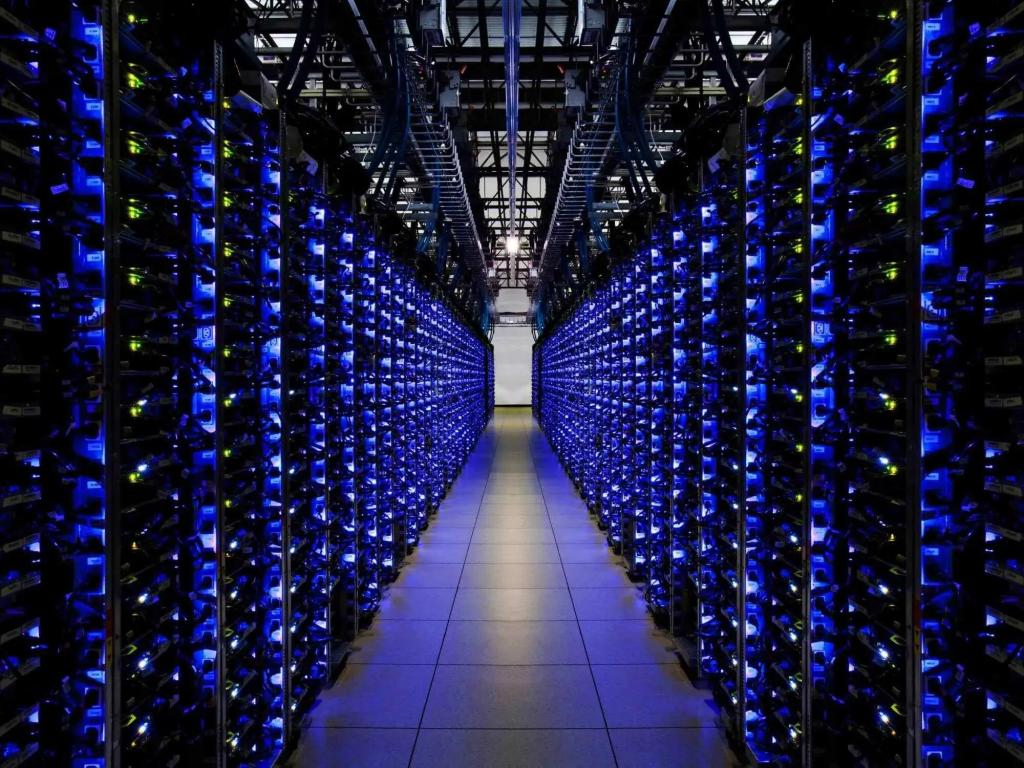
Powerful models require computing capacity, electricity, chips, cooling, networks and substantial investment. Data centres turn theoretical AI capability into a service that can be delivered at scale.
The advantage: the country can support more AI activity, influence prices and availability, build domestic industrial capacity and potentially restrict access to critical computing resources.
3. Deployment: control over economic outcomes
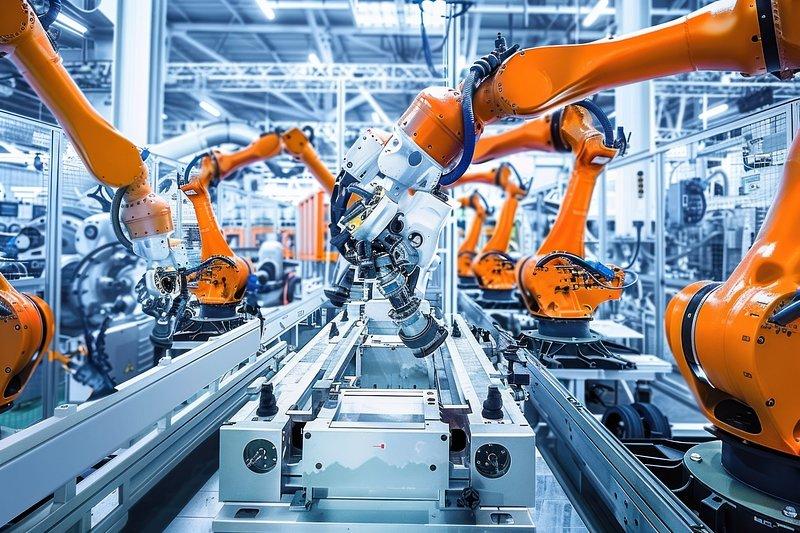
AI must be integrated into factories, healthcare, finance, logistics, public administration, defence and scientific institutions to create real-world value.
The advantage: higher productivity, lower costs, faster innovation, stronger companies and potentially greater military effectiveness.
The third layer is crucial. A country might lead in models and compute yet fail to translate that lead into widespread economic gains. Another country might use slightly less capable models far more effectively across its economy.
The strategic prize is therefore not just producing intelligence. It is converting intelligence into durable national capability.
2. The five concrete advantages of dominance
A. Economic rents: capturing a disproportionate share of the value
If the world’s businesses depend on models, cloud infrastructure and AI services supplied by one country, a significant portion of the resulting economic value can accrue to that country’s companies, investors and workers.
That can mean:
- Profits from model subscriptions, cloud computing and AI-powered services.
- High-value jobs, research activity and investment.
- Greater bargaining power over the companies and countries that depend on its technology.
- A stronger position in setting technical standards and shaping the AI ecosystem.
This is an important distinction: the country that supplies the intelligence can capture value even when the productivity gains are realised elsewhere.
However, corporate profits are not the same as national prosperity. The benefits may be concentrated among a small number of firms and shareholders, while the wider population faces disruption or higher costs.
B. A productivity lead that compounds
Suppose two countries have equally educated populations and similar industrial foundations. One has access to significantly more capable AI, and its businesses adopt it effectively.
Its engineers may develop products faster. Its scientists may test more hypotheses. Its companies may operate with fewer administrative costs. Its defence industry may shorten development cycles.
If those advantages lead to more investment, better products and faster scientific progress, the initial lead can reinforce itself.
The compounding loop
Better models and more compute
More productive firms and research institutions
More revenue, talent, investment and useful data
Further improvements in AI capability
Illustrative feedback loop. It is not guaranteed: competition, diminishing returns and the cost of compute can interrupt it.
This is perhaps the most important long-term advantage. A lead in AI might become a lead in the ability to innovate across many other fields.
C. Strategic leverage over other countries
A country that controls essential AI models and a large share of the computing capacity used to run them can gain leverage over other nations.
Consider what happens if foreign governments, companies, universities and critical industries rely heavily on services hosted abroad. They may become dependent on:
- Continued access to computing capacity.
- The supplier’s prices and commercial terms.
- The supplier’s software interfaces, technical standards and updates.
- The supplier’s decisions about access, security and acceptable use.
In a serious geopolitical dispute, access to certain services or hardware could potentially be restricted. The existence of that possibility can itself influence diplomatic and industrial decisions.
But there is an important qualification: owning data centres does not automatically mean controlling the intelligence inside them, and developing the best model does not mean controlling every machine that runs it. Ownership, jurisdiction, chip supply, cloud contracts and the ability to switch providers all matter.
Open-weight models, alternative suppliers and domestic infrastructure can also reduce dependency.
D. Military and intelligence advantages
AI could increase the effectiveness of intelligence analysis, logistics, cyber defence, simulation, autonomous systems and weapons development.
A country with leading models and sufficient computing capacity might be able to analyse information more rapidly, conduct more simulations and accelerate research into new technologies.
The advantage would not necessarily be a single spectacular autonomous weapon. It could instead be the cumulative effect of making thousands of military and intelligence processes faster, cheaper or more effective.
There are limits. Military power also depends on physical equipment, trained personnel, communications, energy, industrial production and the reliability of systems under adversarial conditions. A model that performs well in a benchmark is not automatically reliable in a battlefield environment.
E. Influence over the rules of the emerging AI economy
The countries whose firms supply widely used AI systems can influence how those systems are designed, which standards become common and what developers must do to reach global markets.
This is a form of structural power. Other countries may formally retain sovereignty while finding that their economic and administrative systems increasingly depend on technologies designed elsewhere.
It is not inevitable that the supplier sets all the rules: governments can regulate access, impose interoperability requirements and develop alternative systems. But the country whose ecosystem becomes the default has a meaningful first-mover advantage.
3. Why data centres matter — but not in the way people sometimes assume
There is a subtle point here. A data centre is not inherently a source of geopolitical power in the same way that oil reserves once were.
Its value depends on what it enables and how difficult it is to replace.
| Asset | Strategic significance |
|---|---|
| Frontier models | Access to advanced capabilities and influence over their development |
| AI chips | Ability to build and operate advanced computing systems |
| Data centres | Capacity to train and run models at scale |
| Electricity | Ability to operate that capacity reliably and economically |
| Proprietary data | Potential advantages in specialised applications |
| Skilled people | Ability to innovate, maintain and improve the entire system |
| Industrial deployment | Ability to convert AI into economic and military results |
The most important insight is that these assets are complementary. A country can have vast data-centre capacity but lack the most advanced chips. It can have leading models but insufficient electricity to serve them economically. It can have both and still fail to transform its industries.
The current evidence illustrates this complexity. Stanford’s 2026 AI Index describes a narrowing US–China model-performance gap, while identifying the concentration of leading chip fabrication in Taiwan as a critical supply-chain dependency.
There is also a countervailing trend: AI models can become cheaper and more efficient, allowing countries to access substantial capabilities without building the world’s largest infrastructure.
So the real question is not simply who has the most data centres. It is who can combine models, chips, energy, capital and practical applications most effectively.
4. Does the leading country become dominant over the rest of the world?
Not necessarily. It helps to distinguish three kinds of dominance.
Economic dominance
The leading country captures a large share of AI-related profits, attracts talent and capital, and improves its productivity. Other countries may still enjoy substantial benefits from access to its technology.
Structural dominance
Other countries become dependent on its technology, infrastructure and standards. The leading country gains influence over the conditions under which others can innovate.
Strategic dominance
AI improves its military capabilities, intelligence, industrial resilience and ability to develop other advanced technologies. This could alter the balance of power between states.
These outcomes do not necessarily occur together. A country might dominate commercial AI services without achieving military superiority. It might lead in military applications while its citizens and businesses fail to capture the full economic benefits.
Nor does the leader necessarily get to dictate terms indefinitely. AI knowledge can spread, talent can move, open models can be adopted and competitors can develop substitutes.
5. The data question: is the advantage really about data?
I would be careful about treating data as the decisive resource.
Data matters enormously in particular domains: medical records, industrial processes, financial transactions, scientific experiments, satellite observations and operational feedback can all improve specialised systems.
But more data does not automatically produce a better general-purpose model. Data quality, computing power, algorithms, research talent and the ability to learn efficiently also matter.
There is another important distinction:
- Training advantage: the ability to develop better models using data, research and compute.
- Operational advantage: the ability to apply those models to real-world tasks and learn from the results.
- Control advantage: the ability to determine who can access the resulting capabilities.
The country that excels in all three would have a more durable position than one that simply accumulates enormous datasets.
6. The deeper question: what does this mean for Europe?
For Europe, and particularly for smaller countries such as Denmark, I think the question should not be framed solely as whether they can build a model as powerful as the leading American or Chinese models.
The more useful question is: which capabilities must a country retain to remain economically productive, politically autonomous and secure in a world where advanced intelligence is supplied by a small number of external providers?
That points towards several priorities:
- Access: reliable, affordable access to advanced AI and sufficient compute.
- Sovereignty: the ability to keep sensitive data and critical public functions under appropriate national or European control.
- Industrial strength: the skills and institutions to integrate AI into manufacturing, energy, pharmaceuticals, shipping, healthcare and other sectors.
- Selective independence: domestic or European capabilities in areas where external dependence would create unacceptable risks.
- Human capital: education, research and the ability to use AI rather than simply purchase it.
A country does not have to own the world’s largest AI infrastructure to prosper. But if it depends on external suppliers for every important capability and lacks the skills to develop alternatives, it may find its choices increasingly constrained.
The goal, therefore, need not be complete technological self-sufficiency. It can be strategic autonomy combined with access to the best global technology.
My conclusion
I would summarise the underlying logic this way:
The first industrial revolution rewarded control over machinery, energy and production. The digital revolution rewarded control over computing, software, networks and platforms. The AI revolution could reward control over the capacity to produce and deploy increasingly general-purpose intelligence.
If that happens, the leading country gains more than a profitable industry. It gains a potentially self-reinforcing advantage in productivity, innovation, capital accumulation and strategic influence.
But the distinction I would keep returning to is this:
Winning the AI race is not the same as winning from AI.
The first means developing the most powerful models and infrastructure. The second means turning those capabilities into widespread prosperity, technological resilience and real-world power.
The country that does the first may have a significant head start. Whether it achieves the second depends on how effectively it deploys AI across its economy and society.
And that leads to what I think is the most revealing question of all: if AI becomes a major source of economic and strategic power, does the world primarily benefit from having one country control the leading systems, or from having several countries capable of accessing, understanding and independently deploying them?
That is not merely a technological question. It is a question about the future distribution of power.
Q: The United States has a long tradition of treating technological leadership as a race: the space race, the semiconductor race, the race for military superiority. That mindset can mobilise enormous resources and produce extraordinary achievements.
But AI may be different. If intelligence becomes a fundamental input to almost every economic activity, winning the race is not necessarily the same as maximising the benefits of the technology. So, what message would you give to those Americans that want to win this race?
A: The ultimate test of American leadership should not be whether other countries lose the AI race. It should be whether America, by leading it, helps create a world that is more prosperous, more capable and more secure — including for Americans themselves.
That would be a victory worth winning.

