

Kazakhstan is known for three things: health, skating, and Borat. In this story, I’ll explore how these three seemingly unrelated topics came together during one unforgettable trip—and what I took away from it.
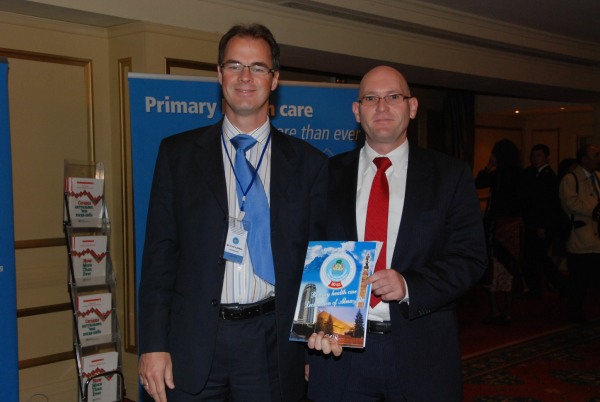
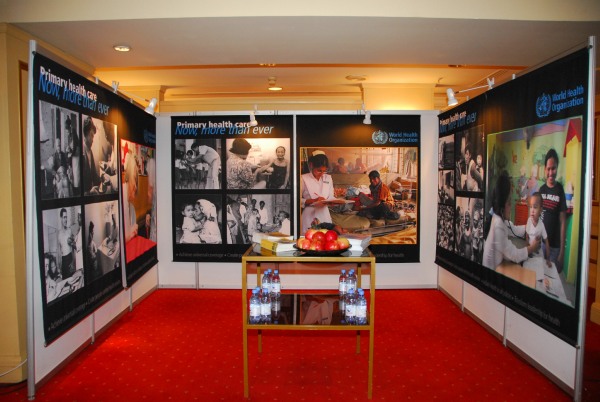
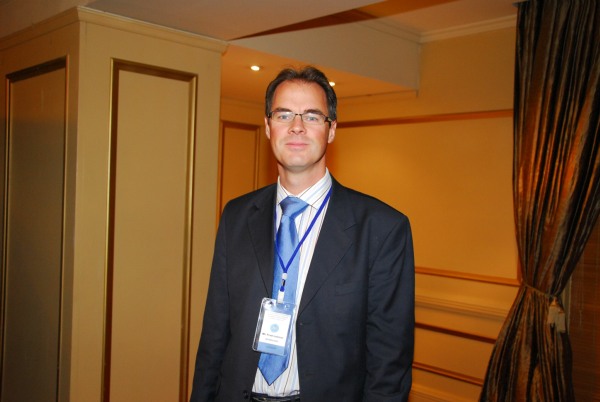
On October 15–16, 2008, I attended a major international conference in Kazakhstan, commemorating the 30th anniversary of the Alma-Ata Declaration on Primary Health Care. The original 1978 event was a historic milestone, the first to place health equity firmly on the global political agenda. Thirty years later, the 2008 conference aimed to reflect on the progress—and shortcomings—of primary health care implementation around the world.
It was a timely gathering. As WHO Director-General Dr. Margaret Chan said when launching the new World Health Report:
“A world that is greatly out of balance in matters of health is neither stable nor secure.”
In 2008, that imbalance was starkly visible. Three simultaneous global crises—food, fuel, and finance—were all threatening people’s health and well-being. Poor countries, as always, bore the brunt, but this time, wealthy nations felt the sting too. Personally, I was not spared: high food and petrol prices had me under financial pressure, my stock portfolio had collapsed, and my weekly Chinese takeout habit backfired when I discovered it might have been laced with melamine.
It was clearly time for something different—to break out of the cycle of worry and misery. Thankfully, I had a second mission on this trip, one much more personal and nostalgic.
Because in 1978, Alma-Ata was famous for more than health care. It was also the site of Medeo (or Medeu in English), the world’s highest-altitude outdoor speed skating rink. In the Netherlands, speed skating is practically a national religion, and in the 1970s and ’80s, I had spent countless hours watching icons like Hilbert van der Duim, Hein Vergeer, and Piet Kleine.
Medeo was legendary—home to dozens of world records across every distance, from the 500 m to the 10,000 m. In 1974, Dutch skater Atje Keulen-Deelstra even became European Champion there. The rink hosted its last major event in 1988—the Men’s World Speed Skating Championship, won by American Eric Flaim. But after the fall of the Soviet Union in 1991, the upkeep became too expensive for newly independent Kazakhstan. Indoor rinks also proved faster, pushing Medeo out of the spotlight.
Still, it lived in my imagination. So I bought a larger suitcase, packed my skates alongside my suit, and prepared for the possibility of skating on sacred ice. Who knows—maybe I’d set a world record of my own.
I landed in Alma-Ata (now called Almaty) at 5:10 AM and was met by a friendly woman from the National Center of Expertise of Medicines. She brought us to Hotel Kazakhstan, centrally located in Almaty. The city’s name, derived from the Kazakh word for “apple,” means “rich with apples”—a contrast to the older Russian version, Alma-Ata, which mistakenly translates to “Grandfather of Apples.”
By 7 AM it was still 3 AM in the Netherlands, so I took a short nap—planning to spend the afternoon skating.
At 10:30 AM, I woke, grabbed my skates, and went downstairs to a small travel agency inside the hotel. Three people sat behind the desk, despite the fact that their tours only ran on weekends. They couldn’t name a single interesting thing to see in Almaty and seemed confused when I asked about Medeo. Only after some persistence did one woman kindly walk me to the bus stop and explain how to reach the rink.
I waited, skates in hand, for bus number 6. It arrived after 20 minutes: a worn-out bus with an elderly man perched on a stool in the aisle collecting fares. Six young Kazakh men sat in the back, eyeing me with curiosity. We drove through the city and began climbing toward the mountains. Medeo is nestled in a valley at 1,691 meters above sea level, and the bus struggled on the incline.
When we finally arrived, I was awed. The scenery was spectacular—mountains rising steeply behind the stadium, which looked surprisingly modern and well-maintained. But then came the disappointment: the rink was closed for renovations ahead of the 2011 Asian Winter Games.
No skating. Not even a photo. A security guard blocked my camera and told me pictures were only allowed after 6 PM—which was exactly when I had to be at the official conference reception. It was 20°C, and I must have looked absurd: a Dutchman in business casual with skates under his arm.
Determined, I walked up behind the stadium, where the hill gave me a clear view inside. I posed with my skates for proof—proof that I had come, that I had tried, and that Sven Kramer (then the reigning Dutch speed skating champion) could rest easy: I would not be breaking any of his records that day.
On the way down, I hired one of the jeeps near the entrance to take me up to the ski resort above the rink. We passed the Medeu Dam, built in the 1960s to protect Almaty from mudslides. The views from the top were stunning, and I took more pictures of the rink below.
My driver, a 64-year-old man, spoke only Russian, but with my basic Polish we managed a conversation. He told me that Russian President Vladimir Putin sometimes came here to ski. Kazakhstan’s President Nazarbayev, he said, owned some of the best properties in the area. Later, someone else confided that it was a “public secret”—in Kazakhstan, all the best buildings supposedly belonged to “The Family.”
Nazarbayev was tolerated, even re-elected every five or six years, but mostly because there were no real opposition candidates.
That’s when it hit me. Maybe there was a connection between Kazakhstan’s most famous exports after all. Borat—sharp in his satire of power and politics. Skates—sharp, to slice through ice and time. And primary health care—an area where we, too, must be sharp. As Dr. Chan said, achieving “health for all” demands precision, courage, and yes, a surgeon’s edge.
Annex 1: Track records of Medeo
Afstand Naam Tijd Jaar
00.500 Tometz 00.36.23 1985
01.000 Tometz 01.12.05 1985
01.500 Sjasjarin 01.52.29 1985
03.000 Martsjoek 03.56.65 1985
05.000 Sjasjarin 06.49.15 1985
10.000 Malkov 13.54.81 1985
 Fred Lafeber